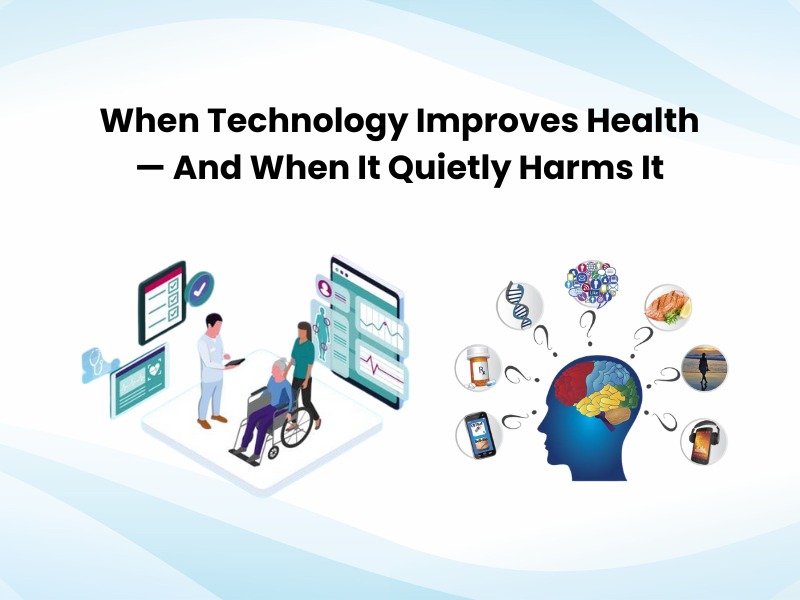
When Technology Improves Health — And When It Quietly Harms It
Technology has become inseparable from modern healthcare. From wearable devices that track heart rates in real time to artificial intelligence systems that assist in diagnosing disease, health technology promises longer lives, better outcomes, and more personalized care. For patients, clinicians, and health systems alike, innovation offers speed, access, and insight on an unprecedented scale.
Yet alongside these benefits lies a quieter, less visible reality. The same technologies that empower individuals to monitor their health can also contribute to anxiety, surveillance, inequity, and ethical blind spots. The question is no longer whether technology improves health—but under what conditions it does so, and when it begins to undermine the very wellbeing it seeks to protect.
This blog explores the dual nature of health technology, examining its benefits, the growing risks around privacy and data use, and the ethical responsibilities shaping the future of digital health.
How Technology Is Transforming Health for the Better?
Health technology has dramatically expanded what is possible in prevention, diagnosis, treatment, and care delivery. At its best, it shifts healthcare from reactive to proactive, and from generalized to personalized.
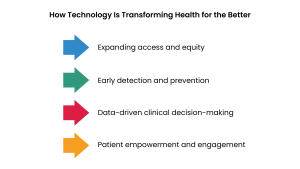
Expanding access and equity
Telemedicine platforms have removed geographical barriers, enabling patients in remote or underserved areas to consult specialists without travel. Digital appointment systems, e-prescriptions, and virtual follow-ups reduce wait times and improve continuity of care.
For individuals with mobility limitations, chronic conditions, or caregiving responsibilities, these tools can mean the difference between delayed treatment and timely intervention.
Early detection and prevention
Wearables and remote monitoring devices allow continuous tracking of vital signs such as heart rate, sleep patterns, glucose levels, and physical activity. These technologies can identify early warning signs before symptoms become severe, supporting preventive care and reducing hospital admissions.
Population-level data analytics further enable public health agencies to track trends, anticipate outbreaks, and allocate resources more effectively.
Data-driven clinical decision-making
Artificial intelligence and advanced analytics are increasingly used to support clinicians in interpreting medical images, predicting disease progression, and tailoring treatment plans. When used responsibly, these tools enhance—not replace—human expertise, improving accuracy and reducing diagnostic delays.
Patient empowerment and engagement
Health apps and digital platforms give individuals greater visibility into their own health data. This transparency can encourage healthier behaviors, medication adherence, and more informed conversations between patients and providers.
When aligned with clinical guidance, technology can strengthen patient agency rather than diminish it.
When Health Technology Begins to Quietly Harm
Despite its promise, health technology can also introduce unintended consequences—often subtle, cumulative, and overlooked.
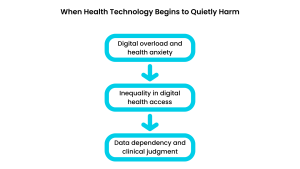
Digital overload and health anxiety
Constant monitoring can blur the line between awareness and obsession. For some users, health metrics become a source of anxiety rather than reassurance. Minor fluctuations in data may be misinterpreted, leading to unnecessary stress or over-medicalization.
In these cases, technology shifts individuals from feeling informed to feeling perpetually at risk.
Inequality in digital health access
Not all populations benefit equally from health technology. Access to devices, digital literacy, reliable internet, and language-appropriate platforms remains uneven. When healthcare systems assume universal access, digital tools can widen existing health disparities rather than reduce them.
Technology designed without inclusivity can quietly exclude those who may need support the most.
Data dependency and clinical judgment
Over-reliance on algorithms can weaken human judgment if clinicians defer to technology without sufficient scrutiny. Automated systems are only as good as the data they are trained on—and biases embedded in datasets can lead to skewed outcomes.
When technology becomes authoritative rather than advisory, it risks narrowing rather than expanding clinical insight.
Privacy Risks: When Health Data Becomes a Commodity
Health data is among the most sensitive categories of personal information. Yet as digital health platforms proliferate, vast amounts of data are collected, stored, analyzed, and shared—often beyond the awareness of users.
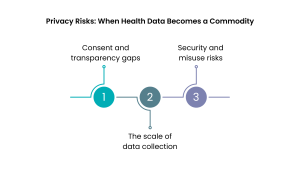
The scale of data collection
Wearables, apps, and online health services routinely capture biometric, behavioral, and location data. While this information can improve care, it also creates detailed profiles of individuals’ bodies, habits, and vulnerabilities.
Consent and transparency gaps
Privacy policies are frequently complex, opaque, or bundled into long terms and conditions. Users may consent without fully understanding who has access to their data, how long it is retained, or how it may be monetized.
In some cases, health data is shared with third parties for research, advertising, or analytics—raising questions about informed consent and control.
Security and misuse risks
Data breaches, unauthorized access, and weak cybersecurity practices can expose sensitive health information. Beyond immediate harm, such breaches can lead to discrimination, stigma, or financial exploitation.
As health data becomes increasingly valuable, the risk profile grows accordingly.
Ethics in Health Technology: Questions We Cannot Ignore
Ethical considerations in health technology extend beyond compliance. They touch on fundamental questions of autonomy, fairness, accountability, and trust.
Who owns health data?
Is health data the property of the individual, the provider, or the platform collecting it? Without clear governance, ownership becomes ambiguous—and individuals may lose meaningful control over information derived from their own bodies.
Algorithmic bias and fairness
AI systems trained on non-representative data can produce biased recommendations, misdiagnoses, or exclusions. These biases often disproportionately affect marginalized groups, reinforcing structural inequalities under the guise of objectivity.
Surveillance versus care
When monitoring becomes constant, the line between care and surveillance blurs. Employers, insurers, or institutions may use health data to assess risk, productivity, or cost—sometimes without explicit consent.
Ethical health technology must prioritize care over control.
Accountability and explainability
When a technology-driven decision leads to harm, responsibility must be traceable. Black-box systems that cannot explain their outputs undermine trust and challenge accountability in clinical settings.
Building Health Technology That Truly Serves Wellbeing
The future of health technology depends not just on innovation, but on intention.
To ensure technology improves health without quietly harming it, organizations and developers must:
- Embed privacy and security by design
- Ensure transparency in data use and consent
- Treat technology as a support tool, not a replacement for human judgment
- Design inclusively, accounting for diverse populations and abilities
- Establish clear ethical governance and accountability mechanisms
For policymakers, clinicians, and leaders, the challenge is to balance innovation with responsibility—and progress with protection.
Conclusion: Progress With Care
Health technology has extraordinary potential to extend lives, improve care, and empower individuals. But without thoughtful design, governance, and ethical oversight, it can also erode trust, deepen inequity, and compromise wellbeing.
The real measure of success is not how advanced our tools become, but whether they serve human health in its fullest sense—physical, mental, and social.
Technology should make us healthier, not more anxious; more empowered, not more exposed. Achieving that balance is one of the most important challenges in the future of healthcare.