Why Cloud Cost Optimization Fails Without Business Alignment

Why Cloud Cost Optimization Fails Without Business Alignment?

Cloud spend isn’t out of control — decision-making is Most organizations don’t overspend on cloud because they lack cost controls. They overspend because no one is clearly accountable for cloud decisions that carry financial consequences. Cloud cost optimization continues to disappoint not due to weak tooling or poor engineering, but because cost is treated as…

Cloud Overspending in 2026 A Governance Failure in Disguise

Cloud Overspending in 2026: A Governance Failure in Disguise

Introduction: The Cost Problem That Refuses to Die By 2026, cloud cost management should be a solved problem. Organizations have access to mature native cost tools, third-party FinOps platforms, detailed dashboards, anomaly detection, and automated optimization features. Yet cloud overspending persists—often at a scale that surprises even seasoned technology leaders. This contradiction points to an…

High-Performance Computing Meets Cloud_Transforming Research and Industry

High-Performance Computing Meets Cloud: Transforming Research and Industry

High-Performance Computing (HPC) has long been a critical enabler of complex problem-solving in industries such as healthcare, energy, and climate science. Traditionally, HPC systems relied on massive on-premises clusters that demanded significant capital investments and ongoing maintenance. Today, the landscape is shifting as cloud-based HPC emerges as a powerful alternative offering scalability, accessibility, and cost…

Multi-Cloud Security and Compliance

Future-Proofing Multi-Cloud Security and Compliance

As multi-cloud adoption becomes the backbone of modern enterprise IT strategy, organizations are confronted with a complex security and compliance landscape. Managing workloads across multiple cloud providers introduces unique risks and regulatory demands, requiring businesses to rethink their approach to cybersecurity. This shift isn’t just about adding more tools it’s about building a proactive, scalable,…

how-to-simplify-multicloud-management

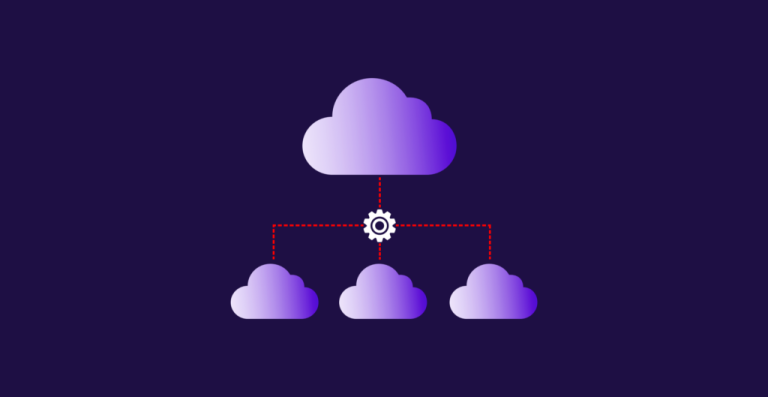
Simplifying Multi-Cloud Management: Tools, Trends, and Best Practices

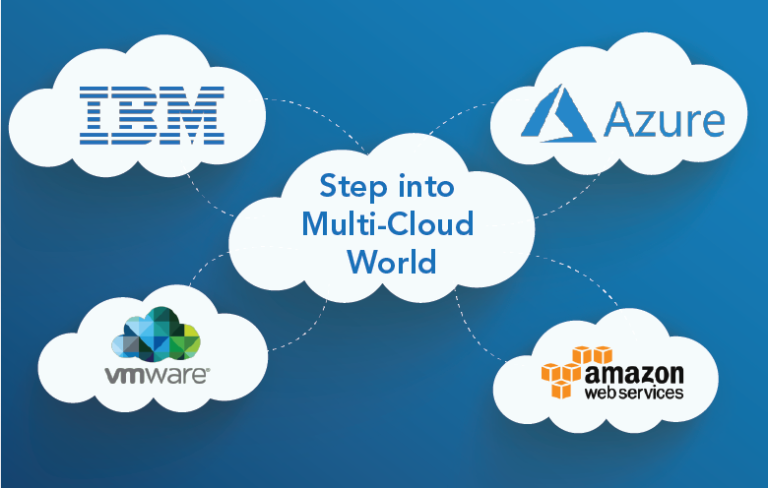
As enterprises scale their digital ecosystems, multi-cloud adoption is rapidly shifting from a strategic experiment to a mainstream operating model. Organizations now rely on multiple cloud providers to leverage the best-of-breed services, mitigate vendor lock-in, and improve resilience. However, managing workloads across Amazon Web Services (AWS), Microsoft Azure, Google Cloud Platform (GCP), Oracle Cloud, and…

Multi-Cloud Strategy

Why Multi-Cloud is Becoming the Default Strategy for Enterprises?

Enterprises today operate in a digital ecosystem defined by constant change, heightened competition, and an ever-expanding volume of data. As workloads grow more complex, organizations are no longer relying on a single cloud provider for their infrastructure needs. Instead, multi-cloud adoption the deliberate use of multiple public and private cloud platforms has shifted from a…

cloud-cost-optimization

Cloud Cost Optimization & FinOps: Best Practices in the Multi-Cloud and AI Era

As cloud adoption accelerates—fueled by AI workloads, hybrid models, and multi-cloud strategies—businesses are facing a new challenge: managing cloud costs without compromising performance. Enter Cloud Cost Optimization and FinOps (Cloud Financial Operations) — the strategic disciplines that help organizations gain visibility, control, and efficiency across their cloud spending. In this article, we explore how cloud…

AI-Optimized Cloud Infrastructure

AI-Optimized Cloud Infrastructure: How Hyperscalers Are Powering GenAI and LLM Workloads?

The rise of Generative AI (GenAI) and Large Language Models (LLMs) is redefining the way businesses and industries operate. But behind these innovations lies a critical foundation: powerful cloud infrastructure optimized specifically for AI workloads. Hyperscalers like AWS, Microsoft Azure, Oracle Cloud Infrastructure (OCI), and Google Cloud Platform (GCP) are leading this transformation, redesigning their…

Serverless Architecture

Serverless & Event-Driven Architectures: The Future of Scalable Cloud Applications

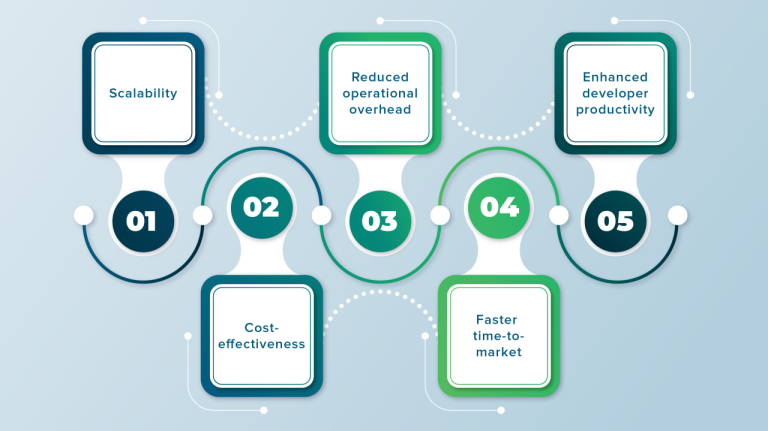
As cloud computing continues to evolve, two architectural paradigms have emerged at the forefront of innovation: Serverless Computing and Event-Driven Architectures (EDA). Together, they are transforming how modern applications are built, deployed, and scaled—offering unmatched agility, cost-efficiency, and resilience. Whether you’re developing real-time analytics, IoT solutions, or microservices-based systems, adopting these approaches can drastically simplify…