Why Organizations Struggle to Stay Secure Over Time

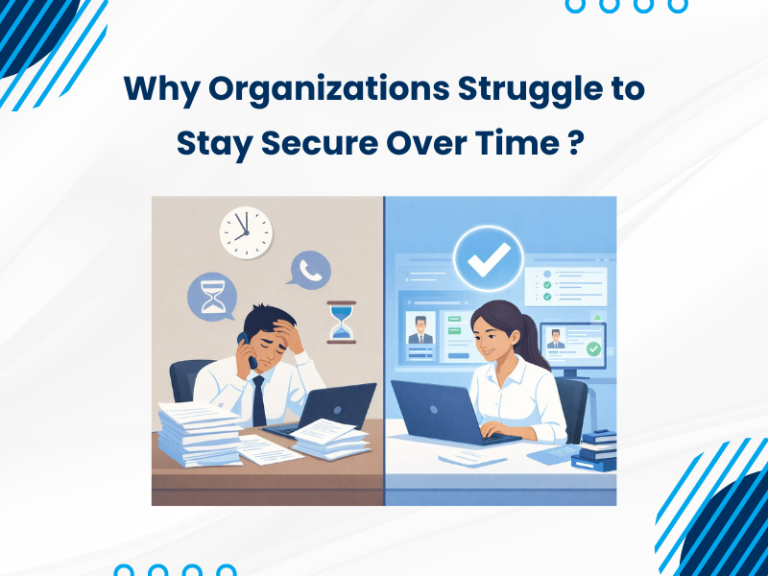
Why Organizations Struggle to Stay Secure Over Time?

Security failures rarely happen overnight. They are the result of slow, often invisible breakdowns in consistency, discipline, and focus. What makes this especially challenging is that most organizations don’t start from a place of weakness they start strong. They invest in tools, define policies, and align with standards. Yet over time, that strength fades. Not…
Why Traditional Security Awareness Programs Fail to Change Behavior?

Why Traditional Security Awareness Programs Fail to Change Behavior?

Organizations invest heavily in security awareness programs, yet phishing clicks, credential leaks, unsafe device usage, and risky behaviors continue to occur. Despite annual training sessions, employees still fall for social engineering attacks, reuse weak passwords, and mishandle sensitive data. This paradox raises a critical question: If awareness exists, why doesn’t behavior change? The answer lies…

How Small Human Mistakes Escalate into Major Security Incidents?

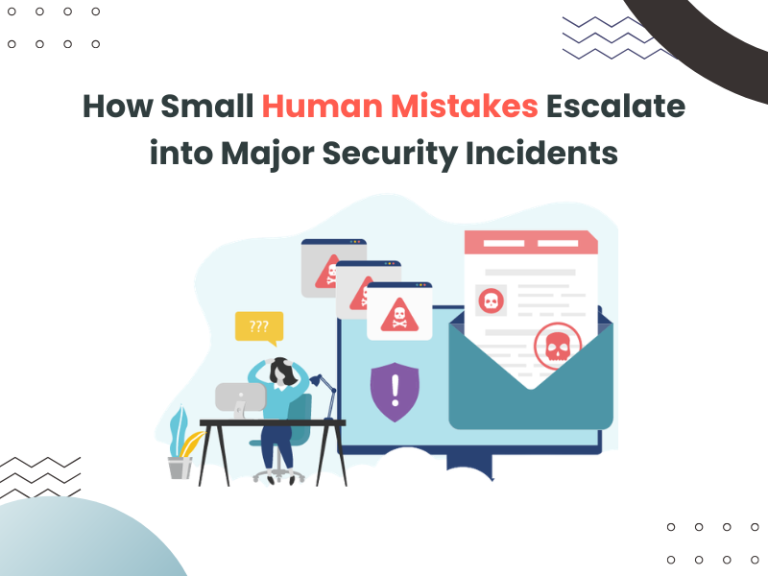
How Small Human Mistakes Escalate into Major Security Incidents?

In cybersecurity discussions, organizations often focus on advanced threats—sophisticated malware, zero-day exploits, or highly organized threat actors. While these threats are real, many major security incidents do not start with complex attacks. Instead, they begin with something much simpler: a small human mistake. A misconfigured permission. A forgotten patch. A shared password. A rushed approval….

The Enforcement Gap Where Security Controls Quietly Collapse

The Enforcement Gap: Where Security Controls Quietly Collapse

Most security failures don’t begin with attackers. They begin internally — in the space between what is defined and what is enforced. Organizations invest heavily in frameworks, policies, tools, and dashboards. On paper, controls exist. Audits pass. Reports look reassuring. Yet breaches, outages, and regulatory findings still occur — often in environments that appeared “well…

Why Well-Designed Security Strategies Fail During Execution?

Why Well-Designed Security Strategies Fail During Execution?

Most large organizations today do not suffer from a lack of security strategy. They have frameworks, roadmaps, maturity models, and multi-year investment plans. Yet breaches, control failures, audit findings, and chronic risk exposure persist. The problem is rarely strategy quality. It is execution breakdown. Well-designed security strategies fail not because they are wrong—but because they…

Why Cloud Cost Optimization Fails Without Business Alignment

Why Cloud Cost Optimization Fails Without Business Alignment?

Cloud spend isn’t out of control — decision-making is Most organizations don’t overspend on cloud because they lack cost controls. They overspend because no one is clearly accountable for cloud decisions that carry financial consequences. Cloud cost optimization continues to disappoint not due to weak tooling or poor engineering, but because cost is treated as…

Cloud Overspending in 2026 A Governance Failure in Disguise

Cloud Overspending in 2026: A Governance Failure in Disguise

Introduction: The Cost Problem That Refuses to Die By 2026, cloud cost management should be a solved problem. Organizations have access to mature native cost tools, third-party FinOps platforms, detailed dashboards, anomaly detection, and automated optimization features. Yet cloud overspending persists—often at a scale that surprises even seasoned technology leaders. This contradiction points to an…

Zero Trust Is a Strategy, Not a Product Stack

Zero Trust Is a Strategy, Not a Product Stack

For years, Zero Trust has been marketed as a destination—something you buy, deploy, and check off. Vendor roadmaps promise “Zero Trust in a box,” and organizations proudly list the tools they’ve acquired to prove maturity. Yet despite heavy investment, breaches continue. Lateral movement still happens. Privilege creep persists. And security teams quietly admit that the…

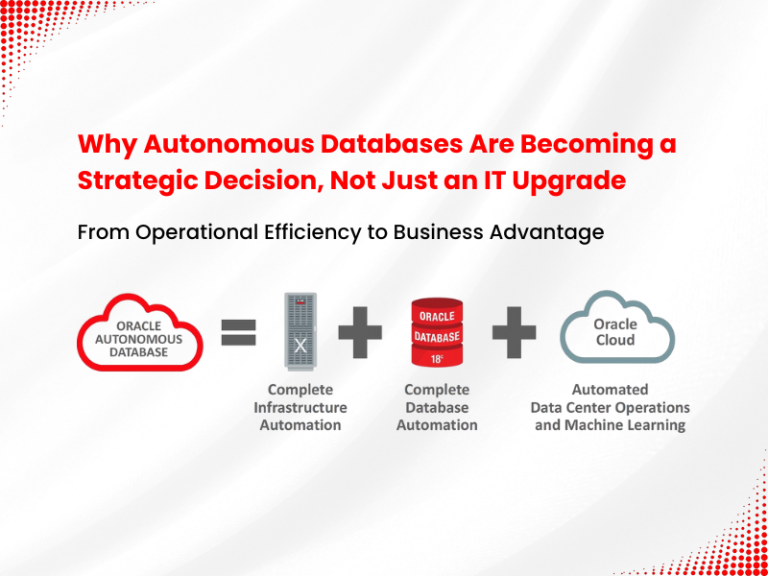
Why Autonomous Databases Are Becoming a Strategic Decision — Not Just an IT Upgrade

Why Autonomous Databases Are Becoming a Strategic Decision — Not Just an IT Upgrade

In today’s data-driven world, organizations face an ever-growing need to store, analyze, and act on massive volumes of data. Traditional database management systems — managed manually by DBAs and IT teams — have reached a tipping point. The complexity, cost, and risk associated with these systems have made decision-makers rethink how data platforms should be…