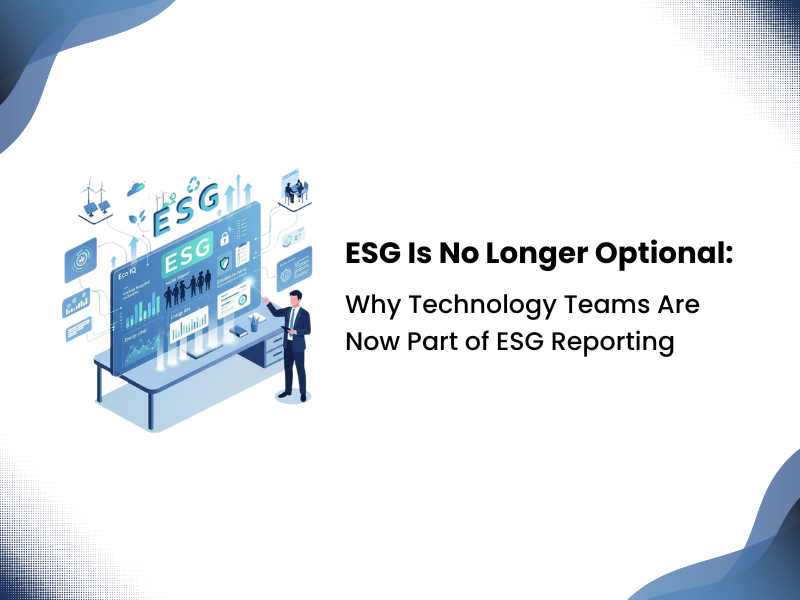
ESG Is No Longer Optional: Why Technology Teams Are Now Part of ESG Reporting
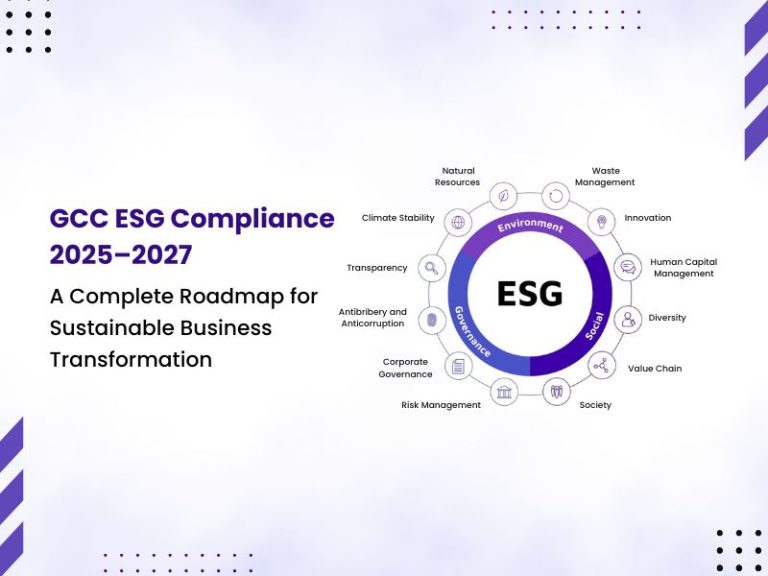
In today’s rapidly changing corporate landscape, Environmental, Social, and Governance (ESG) reporting is no longer a niche or “nice to have.” It has transitioned from a voluntary communication exercise into a strategic, mandatory, and technology-driven discipline that shapes investor confidence, regulatory compliance, business strategy, and brand reputation.
Here’s the big shift:
Technology teams are no longer peripheral — they are core to ESG implementation and reporting.
1. What Is ESG — And Why It Matters Today?
ESG reporting refers to the disclosure of a company’s environmental impact, social responsibility efforts, and governance practices alongside financial performance. Traditionally, ESG disclosures were often manual, fragmented and inconsistent, relying heavily on spreadsheets and periodic surveys.
However, the world’s stakeholders — from investors to regulators to consumers — now demand rigorous, accurate, comparable, and auditable ESG data. Today’s disclosures shape real economic outcomes such as access to capital, credit ratings, and even market valuation.
This shift reflects a broader transformation in corporate accountability:
- ESG metrics influence investment decisions and risk assessments.
- Disclosures now inform lenders, insurers, and regulators as seriously as financial statements.
- Sustainable performance is a strategic differentiator, not a PR bulletin.
2. The Rise of Regulatory Pressure: ESG Isn’t Optional Anymore
One of the most powerful forces driving technology integration into ESG is regulation.
Global ESG disclosure mandates
Governments and regulators globally have declared an end to voluntary sustainability reporting for large enterprises. For example:
- The EU’s Corporate Sustainability Reporting Directive (CSRD) requires extensive standardized ESG disclosures from companies operating in the EU, including environmental impacts and human rights due diligence.
- Similar initiatives are emerging or being updated in the UK, U.S., and Asia.
India’s move toward mandatory ESG disclosures
In India, the Business Responsibility and Sustainability Reporting (BRSR) framework — originally voluntary — is now mandatory for the top 1,000 listed companies, and efforts are underway to expand assurance requirements.
This regulatory push has two effects:
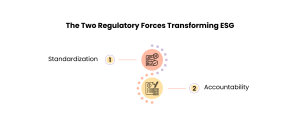
- Standardization — Companies must publish ESG metrics that are consistent, comparable and verifiable.
- Accountability — Regulators expect the same rigor in ESG reporting as in financial reporting, including traceable and auditable data processes.
The bottom line? Manual and siloed approaches no longer work. Businesses must adopt systems and processes that ensure reliable ESG data, often under external scrutiny.
3. Why Technology Is the Backbone of Modern ESG Reporting?
If ESG reporting is now compulsory and strategic, then technology is the backbone that makes it feasible. Legacy manual reporting struggles to cope with:
- disparate data sources (operational systems, HR data, carbon accounting, supply chain systems)
- frequent framework updates (GRI, SASB, TCFD, IFRS S2 etc.)
- expectations for real-time or near-real-time reporting
- third-party assurance requirements
Key technology roles in ESG
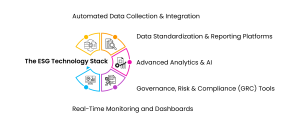
Automated Data Collection & Integration
IoT sensors, enterprise systems, and cloud platforms pull environmental and social data automatically from operations — eliminating manual entries and human error.
Data Standardization & Reporting Platforms
Software tools now integrate ESG metrics with financial and operational systems, providing a single source of truth and aligning with global frameworks.
Advanced Analytics & AI
AI and machine learning process massive datasets to identify trends, anomalies, and risks — and can even forecast future ESG performance.
Governance, Risk & Compliance (GRC) Tools
RegTech solutions bring compliance automation to ESG, ensuring automated checks for evolving regulatory requirements and reducing legal exposure.
Real-Time Monitoring and Dashboards
Companies now track ESG performance live, enabling proactive intervention rather than retrospective reporting cycles.
4. The Role of IT Teams in ESG Success
The technical transformation of ESG elevates IT from a support function to a strategic partner in corporate sustainability.

a) IT Architects ESG Data Infrastructure
IT teams design and maintain the architecture that collects, stores, processes and secures ESG data — often IOT platforms, cloud systems, data lakes and enterprise reporting engines.
b) Security, Privacy & Trust
IT ensures that ESG data adheres to the same cybersecurity, privacy, and compliance standards as financial and operational data — a critical part of governance.
c) Cross-Functional Integration
ESG data often comes from HR, operations, supply chain, facilities management, and finance. IT ensures these systems talk to each other, eliminating silos and data inconsistencies.
d) Innovation Leadership
Whether exploring blockchain for supply chain traceability or AI for emissions forecasting, technology leaders are at the forefront of next-gen ESG capabilities.
5. Governance — The ‘G’ in ESG — Anchors the Whole Process
Governance is more than board committees and policies — it’s about operational integrity, transparency, and accountability.
Good governance relies on tech
- Data governance frameworks standardize data quality, lineage, and accountability.
- Audit trails and immutable logs (e.g., blockchain) enhance trust in disclosures.
- AI-assisted oversight tools help identify inconsistencies and support human review.
Governance teams rely on reliable, auditable data to make informed decisions — from risk management to executive compensation tied to ESG performance.
6. The Strategic Impact — Beyond Compliance
Technology-enabled ESG reporting is not just about meeting requirements — it’s about building strategic advantage:
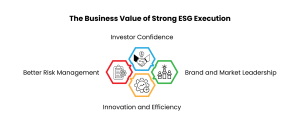
Better Risk Management
Real-time insights help companies anticipate and mitigate ESG risks — whether carbon spikes or labor practice controversies.
Investor Confidence
Transparent and verifiable ESG data strengthens investor trust and can lower cost of capital.
Brand and Market Leadership
Organizations that excel in ESG reporting attract talent, customers, and partners who value ethical, sustainable leadership.
Innovation and Efficiency
Data integration often reveals operational inefficiencies and opportunities — turning ESG initiatives into business value drivers.
7. Challenges and Best Practices
While technology elevates ESG reporting, organizations still face hurdles:
- Integrating disparate legacy systems
- Ensuring data accuracy and audit readiness
- Adapting to constantly evolving frameworks
Best Practices include:
- Establishing strong data governance early
- Choosing scalable ESG reporting platforms
- Embedding ESG KPIs into core enterprise metrics
- Maintaining human oversight for AI and automated insights
Conclusion: ESG Is Now a Data-Driven Enterprise Function
ESG is no longer a fringe reporting activity. It is a business imperative driven by regulatory pressure, investor expectations, and competitive strategy. The era of spreadsheets and annual sustainability brochures is over. In its place stands a technology-first, governance-backed, data-centric approach that demands active participation from IT, analytics, and business stakeholders alike.
Integrating ESG into the heart of enterprise technology and governance is not optional — it’s essential for companies that want to thrive in today’s economy.