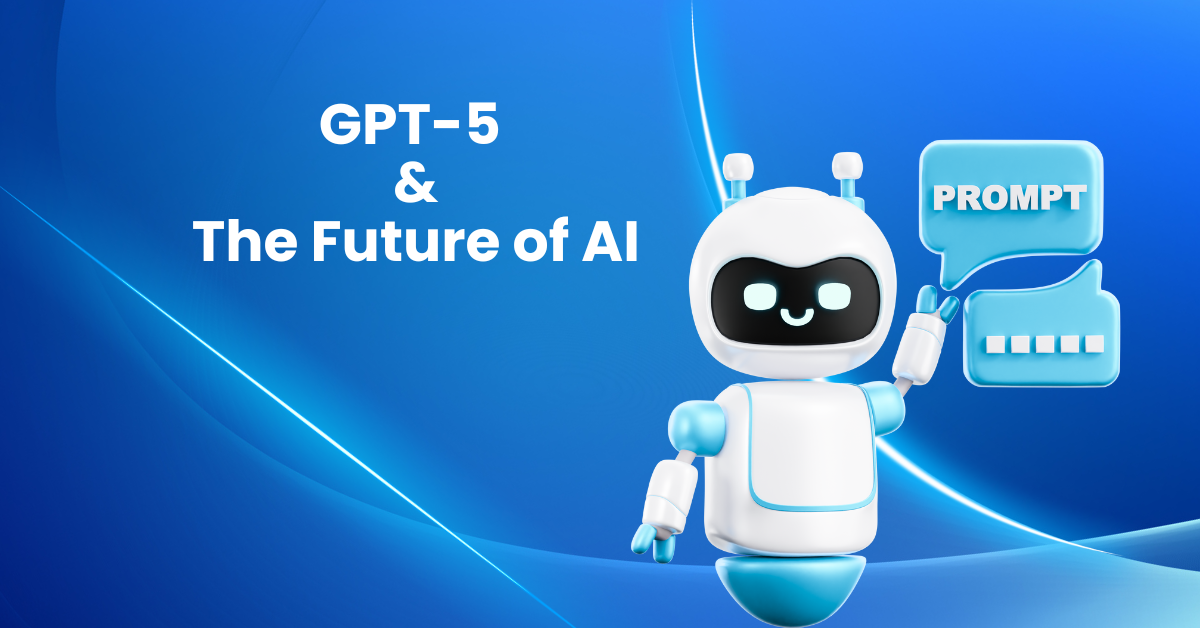
GPT-5 and the Future of Large Language Models
Artificial intelligence has made significant progress in recent years, and large language models (LLMs) like OpenAI’s GPT series have been at the center of this transformation. With GPT-4 already reshaping industries, attention is now shifting toward GPT-5, a model that many expect to push the boundaries of what machines can understand, generate, and reason about. But what does GPT-5 actually bring to the table, and how will it shape the future of work, education, research, and society as a whole?
What GPT-5 Really Is
GPT-5 is expected to represent a leap forward in both scale and capability compared to GPT-4. While GPT-4 showcased strong reasoning skills and limited multimodal functionality (handling text and images), GPT-5 is designed to be even more multi-modal, likely supporting text, images, audio, and video inputs in more seamless ways.
Key differences between GPT-4 and GPT-5 may include:
-
Reasoning Ability: GPT-5 is projected to demonstrate stronger logical reasoning, improved contextual understanding, and fewer factual errors.
-
Efficiency: Enhanced architectures could allow GPT-5 to run more efficiently, reducing costs and energy requirements while providing faster, more accurate outputs.
-
Memory & Personalization: Unlike earlier models, GPT-5 could introduce longer memory capabilities, enabling it to retain context over extended interactions.
-
Alignment with Human Intent: Better fine-tuning methods may reduce risks of bias, hallucinations, or unhelpful outputs, improving its reliability.
In essence, GPT-5 is not just a bigger model it’s a step toward more adaptive and intelligent AI agents.
Applications of GPT-5
The potential applications of GPT-5 go far beyond simple text generation. It could reshape industries and daily workflows in profound ways:
-
Research & Knowledge Work: Scientists and academics may use GPT-5 to accelerate literature reviews, generate hypotheses, and even assist in experimental design.
-
Business Workflows: From drafting complex reports to automating customer support, GPT-5 could streamline operations across industries, boosting productivity.
-
Education: Virtual tutors powered by GPT-5 may adapt to individual learning styles, providing tailored explanations and exercises for students.
-
Healthcare: Doctors could rely on GPT-5 for faster access to medical knowledge, diagnostics support, and even patient communication.
-
Creative Industries: Writers, designers, and filmmakers might use GPT-5 as a co-creator, generating ideas, scripts, or even multimedia content.
With its multimodal capabilities, GPT-5 has the potential to act as a universal assistant, bridging the gap between information, creativity, and execution.
Limitations and Challenges
Despite the excitement, GPT-5 will not be without its challenges. Some of the known issues with large language models will remain critical to address:
-
Bias: Like all LLMs, GPT-5 may reflect biases present in its training data, raising concerns about fairness and inclusivity.
-
Hallucinations: The risk of generating false or misleading information will continue, even with improved guardrails.
-
Energy Consumption: Training models at this scale requires immense computational power, leading to environmental and ethical concerns.
-
Reliability: Businesses and researchers must remain cautious, ensuring that outputs are fact-checked and not blindly trusted.
These limitations highlight that GPT-5, while powerful, must be used responsibly and in conjunction with human oversight.
Impact on Work and Society
GPT-5 has the potential to reshape the future of work. Routine knowledge-based tasks could be increasingly automated, freeing professionals to focus on higher-value strategic or creative work. For instance:
-
Lawyers might automate contract reviews.
-
Analysts could rely on GPT-5 for rapid data synthesis.
-
Educators might use it to create adaptive, student-specific lesson plans.
However, this also raises questions about job displacement, reskilling, and the ethics of AI-driven automation. Professionals will need to adapt, learning how to collaborate with AI systems rather than compete against them.
The Future Direction: Toward AGI?
Is GPT-5 a step toward Artificial General Intelligence (AGI) the level of AI capable of human-like reasoning across any task? While GPT-5 will likely be the most advanced LLM to date, experts suggest that it still falls short of true AGI.
However, GPT-5 represents a milestone in the gradual march toward superintelligence. Its advancements in reasoning, multimodality, and alignment bring AI closer to a future where intelligent systems can operate as genuine partners in human progress.
Conclusion
GPT-5 is not just another AI upgrade it symbolizes the next chapter in the evolution of large language models. With the potential to transform industries, augment human capabilities, and redefine workflows, GPT-5 promises both opportunities and challenges. While it is unlikely to achieve full AGI, it is a major step in that direction, pushing us closer to a world where human and machine intelligence work hand in hand.
As businesses, educators, and policymakers prepare for this shift, one thing is clear: GPT-5 will shape the future of how we learn, work, and create.