AI in Healthcare: Beyond Diagnosis to Personalized Medicine
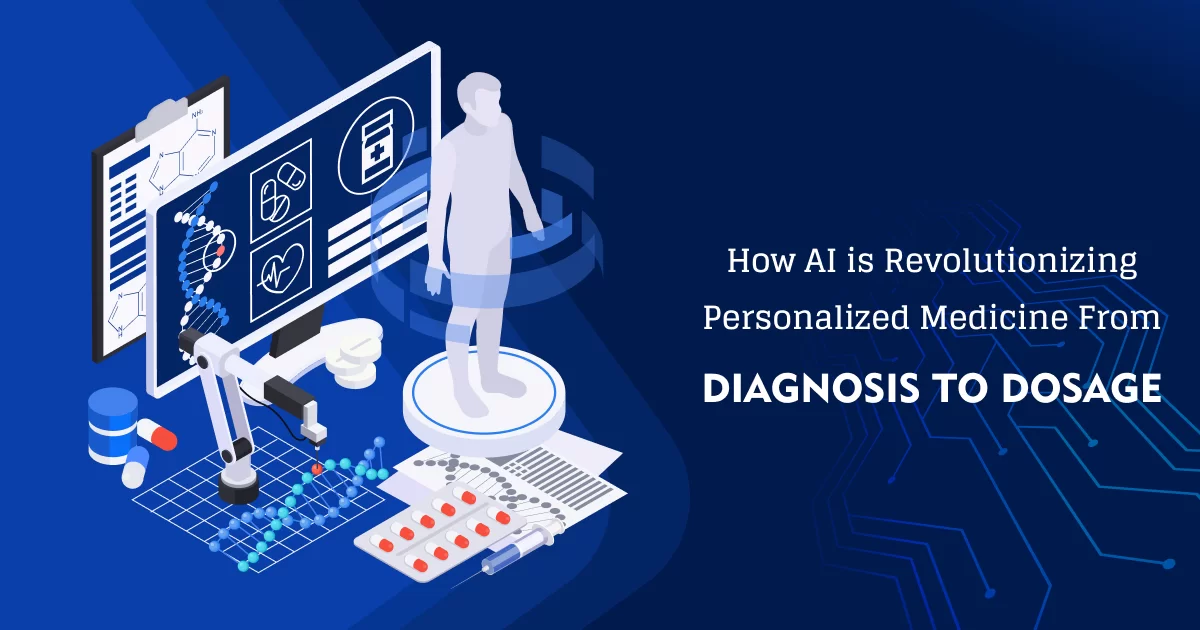
Artificial Intelligence (AI) is transforming industries across the globe, but nowhere is its impact more profound than in healthcare. Once limited to assisting in diagnostics, AI is now evolving into a powerful driver of personalized medicine, reshaping how treatments are developed, delivered, and monitored. With advancements in machine learning, predictive analytics, natural language processing, and generative AI, healthcare is moving beyond one-size-fits-all approaches to more individualized, data-driven care models.
In this article, we explore how AI is currently being applied in healthcare, its role in personalized medicine, the opportunities and challenges it brings, and what the future holds for AI-driven patient care.
Current Applications of AI in Healthcare
AI is already embedded across various aspects of healthcare systems, enabling better efficiency, faster diagnosis, and improved patient management. Some of the key applications include:
1. Medical Imaging and Diagnostics
AI-powered tools can analyze medical images such as X-rays, MRIs, and CT scans with remarkable accuracy. These systems help radiologists detect anomalies such as tumors, fractures, or early signs of diseases like cancer and Alzheimer’s often earlier than human eyes can. Google’s DeepMind and IBM Watson Health are prominent examples of AI systems assisting in radiology.
2. Drug Discovery and Development
AI models significantly accelerate drug discovery by predicting how molecules interact, identifying potential drug candidates, and even simulating clinical trials. What once took years of laboratory work can now be reduced to months. For example, AI played a vital role in accelerating the development of vaccines during the COVID-19 pandemic.
3. Hospital Workflow Optimization
Hospitals are adopting AI to streamline administrative processes, manage patient scheduling, predict hospital admissions, and optimize resource allocation. This reduces waiting times, prevents staff burnout, and ensures better patient care delivery.
Personalized Healthcare: AI-Driven Transformation
The future of medicine lies in personalization moving from treating symptoms to addressing individual health needs. AI enables this by analyzing vast datasets, from medical records to genomic sequences.
1. Predictive Analytics for Preventive Care
AI algorithms can analyze patient histories, lifestyle data, and environmental factors to predict potential health risks. For instance, predictive models can alert patients at risk of heart disease or diabetes before symptoms appear, enabling early intervention and lifestyle adjustments.
2. Genomic Medicine and Tailored Treatments
AI is revolutionizing genomics by interpreting genetic information and identifying mutations linked to specific diseases. This paves the way for personalized therapies, where treatments are designed based on a patient’s unique genetic profile leading to better outcomes in cancer therapy, rare disease management, and chronic illnesses.
3. AI-Powered Health Assistants
Virtual health assistants powered by natural language processing (NLP) are helping patients manage chronic conditions, track medications, and access medical advice in real-time. These tools are improving accessibility to healthcare, particularly in remote or underserved regions.
Opportunities Created by AI in Healthcare
The integration of AI into healthcare systems opens new possibilities:
-
Faster Clinical Trials: AI can model and predict patient responses, reducing the time and cost of clinical trials.
-
Improved Patient Outcomes: By enabling earlier detection and personalized treatment, AI can reduce mortality rates and improve quality of life.
-
Cost Efficiency: Automation of workflows, predictive analytics, and optimized treatments can significantly cut healthcare costs for providers and patients alike.
-
Global Health Access: AI-driven telemedicine and virtual consultations bridge the gap for patients in rural or underserved areas.
Challenges in AI-Driven Healthcare
Despite its promise, AI in healthcare faces considerable challenges that must be addressed:
1. Privacy and Data Security
Medical data is highly sensitive. Protecting patient information while allowing AI systems to analyze large datasets is a complex challenge. Compliance with laws such as HIPAA and GDPR remains crucial.
2. Bias in AI Models
AI systems are only as good as the data they are trained on. If the training data lacks diversity, the AI may produce biased results, leading to disparities in treatment. Addressing fairness and inclusivity in datasets is critical.
3. Regulatory and Ethical Hurdles
Healthcare is a highly regulated sector, and AI-powered tools must meet strict standards for safety and efficacy. Regulatory frameworks are still catching up with the rapid pace of AI innovation.
4. Trust and Adoption
Doctors and patients need to trust AI systems before widespread adoption. Clear explanations, transparency, and human oversight are key to building confidence.
Future Outlook: AI as a Partner in Healthcare
The future of healthcare will not be about AI replacing doctors but about AI empowering them. AI will serve as a co-pilot providing actionable insights, handling repetitive tasks, and enabling doctors to focus on patient care.
We can expect:
-
Integrated AI Ecosystems: Hospitals using AI across every layer from diagnostics to patient management.
-
Personalized Digital Twins: Virtual replicas of patients that simulate health outcomes under different treatments.
-
AI-Driven Global Health Initiatives: Expanding access to quality healthcare in developing countries.
-
Continuous Monitoring: Wearables and AI-enabled sensors providing real-time health data for proactive care.
Conclusion
AI is ushering in a new era of personalized medicine, where treatments are not just based on symptoms but tailored to the unique biology and needs of each individual. From faster drug discovery and predictive analytics to AI-powered health assistants, the opportunities are immense. However, addressing challenges around privacy, bias, and regulation will be crucial to unlocking AI’s full potential in healthcare.
Ultimately, the future lies in collaboration AI as a trusted partner working alongside healthcare professionals to improve patient outcomes, enhance efficiency, and create a more accessible and equitable healthcare system worldwide.