Serverless & Event-Driven Architectures: The Future of Scalable Cloud Applications
As cloud computing continues to evolve, two architectural paradigms have emerged at the forefront of innovation: Serverless Computing and Event-Driven Architectures (EDA). Together, they are transforming how modern applications are built, deployed, and scaled—offering unmatched agility, cost-efficiency, and resilience.
Whether you’re developing real-time analytics, IoT solutions, or microservices-based systems, adopting these approaches can drastically simplify your infrastructure and speed up innovation.
What is Serverless Computing?
Despite its name, serverless computing doesn’t mean there are no servers. It means developers don’t have to manage or provision them. The cloud provider automatically handles the infrastructure, scaling, and resource allocation.
In serverless, you write your function or code, and the platform runs it on demand, only when triggered—charging you only for the compute time consumed.
Popular Serverless Platforms:
-
AWS Lambda
-
Azure Functions
-
Google Cloud Functions
-
Oracle Functions (built on Fn Project)
-
IBM Cloud Functions
Key Benefits of Serverless:
-
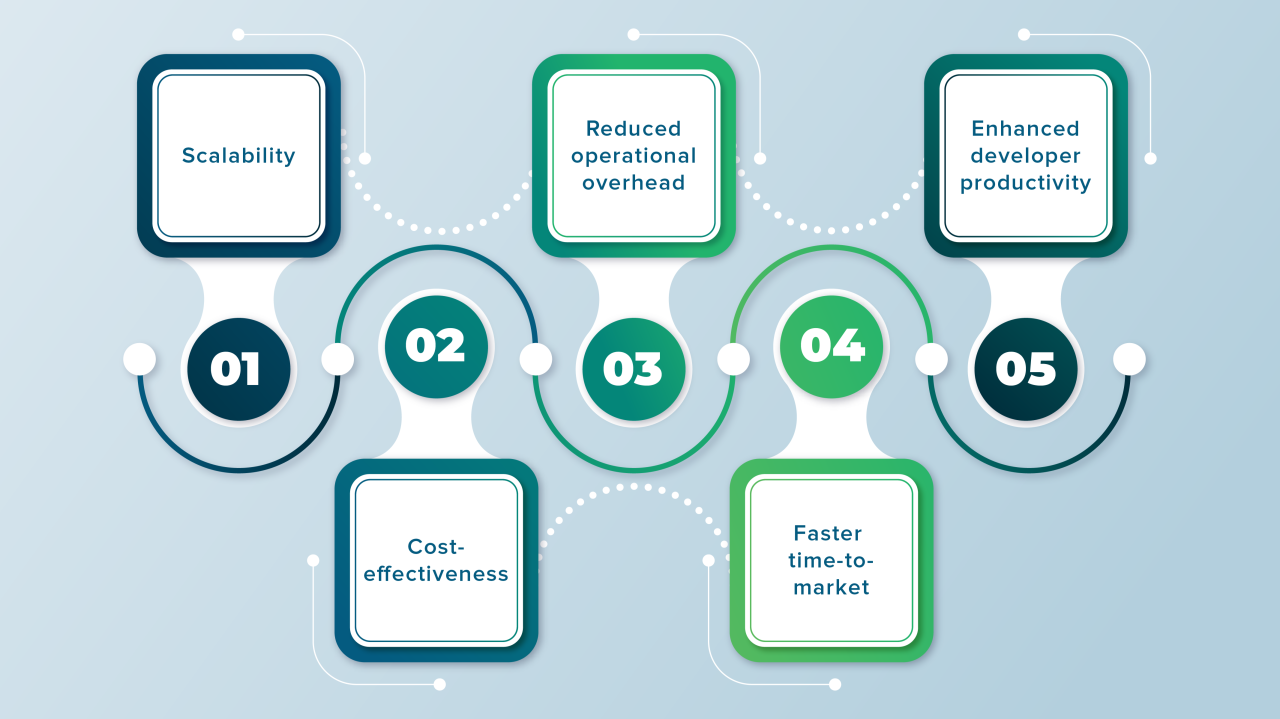
No server management: Focus purely on code.
-
Automatic scaling: From zero to millions of requests.
-
Pay-as-you-go: Costs based on actual usage, not idle time.
-
Faster development cycles: Accelerate deployment and iteration.
Understanding Event-Driven Architecture (EDA)
Event-driven architecture is a design pattern in which components of an application communicate through events—actions or state changes that are produced and consumed by services asynchronously.
In EDA, an event producer (like a user click, IoT sensor, or database update) triggers event consumers (like a function, workflow, or notification system). This decoupling makes systems highly scalable, flexible, and reactive.
Event Brokers / Middleware Examples:
-
Apache Kafka
-
Amazon EventBridge
-
Azure Event Grid
-
Oracle Cloud Events Service
-
Google Pub/Sub
Key Benefits of EDA:
-
Loose coupling: Services operate independently, reducing dependencies.
-
Scalability: Easily handle large volumes of asynchronous requests.
-
Resilience: Failures in one component don’t crash the entire system.
-
Real-time responsiveness: Great for use cases like fraud detection, stock alerts, or live dashboards.
Why Serverless and EDA Work Better Together
While powerful individually, serverless and event-driven architectures complement each other to create scalable, cost-effective cloud-native applications.
In this model:
-
Events trigger serverless functions automatically.
-
No need to maintain event listeners or servers.
-
You can build complex workflows, real-time responses, or automation with minimal infrastructure.
Use Case Example:
-
An eCommerce site captures a “purchase complete” event.
-
The event triggers multiple serverless functions:
-
One sends a confirmation email.
-
One updates inventory in the database.
-
One notifies the shipping system.
-
One logs the transaction for analytics.
-
Each function runs independently, scales automatically, and the customer experiences near-instant results.
Real-World Applications of Serverless & EDA
-
Real-Time Data Processing
Analyze data streams (IoT, user behavior, financial transactions) as events occur—without waiting for batch processing. -
Automated Workflows
Trigger specific tasks in response to system or user-generated events (e.g., onboarding, notifications, ticket updates). -
IoT and Smart Devices
Process sensor data in real-time using event streams and lightweight serverless logic for control actions. -
Chatbots and Voice Assistants
Serverless functions can handle dynamic intents based on user inputs, triggered by events in messaging platforms. -
DevOps Automation
Trigger infrastructure changes, log analysis, or alerts based on CI/CD pipeline events or security anomalies.
Challenges to Consider
While promising, serverless and EDA come with their own set of considerations:
-
Cold starts: Initial latency when spinning up a function after inactivity.
-
Observability: Harder to trace across distributed event flows.
-
State management: Stateless design may require external storage for workflows.
-
Vendor lock-in: Proprietary implementations can reduce portability.
However, these challenges are increasingly being addressed by cloud-native tools, open-source frameworks, and improved observability platforms.
Oracle’s Role in Serverless and Event-Driven Innovation
Oracle Cloud Infrastructure (OCI) offers robust support for serverless and event-driven development:
-
Oracle Functions: Fully managed serverless platform built on open-source Fn Project.
-
OCI Events Service: Triggers actions in response to state changes in OCI resources.
-
Streaming & Integration: OCI Streaming (compatible with Kafka) and Oracle Integration Cloud (OIC) for building scalable EDA pipelines.
With deep integration into enterprise systems (ERP, HCM, CX), Oracle’s platform is uniquely positioned for mission-critical, event-driven applications.
The Future is Event-Driven and Serverless
As organizations seek greater agility, scalability, and operational efficiency, serverless and event-driven architectures offer a powerful solution. By decoupling logic, automating responses, and eliminating infrastructure management, businesses can innovate faster and scale smarter.
Whether you’re building next-gen web applications, AI/ML pipelines, or real-time analytics platforms, these paradigms are shaping the future of cloud-native development.