Neurosymbolic AI: Bridging Neural Networks and Symbolic Reasoning
As artificial intelligence continues to evolve, researchers and engineers face a growing challenge: how to combine the strengths of symbolic logic (rules, reasoning, and knowledge representation) with the adaptability and pattern recognition power of neural networks. The answer? Neurosymbolic AI — a hybrid approach that’s gaining traction as a promising frontier in machine learning and AI.
What is Neurosymbolic AI?
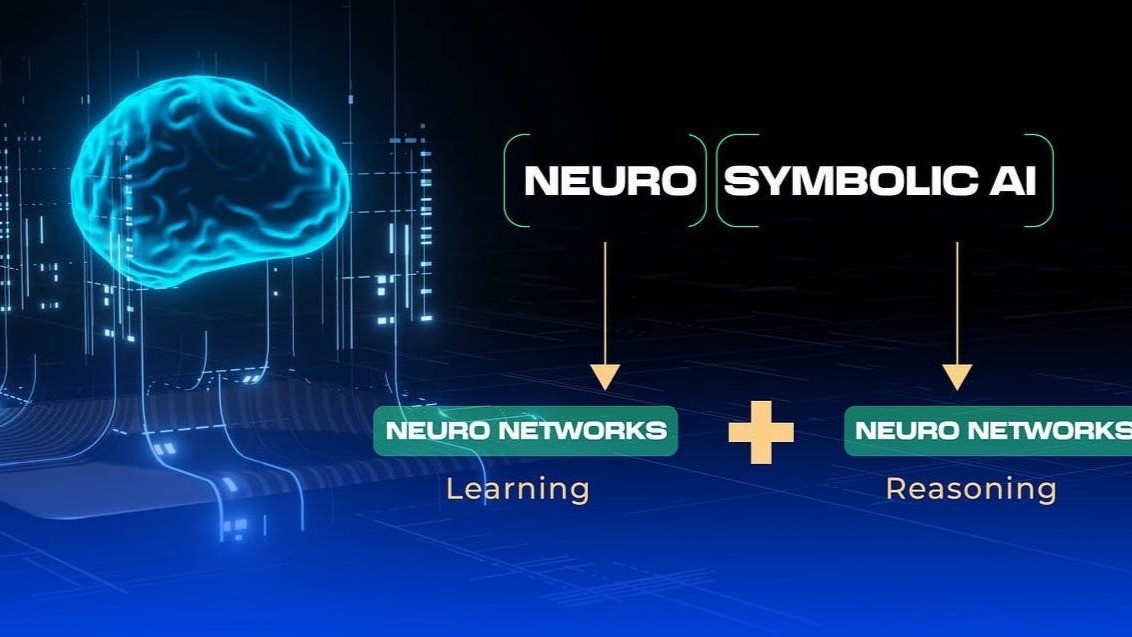
Neurosymbolic AI is a hybrid paradigm that integrates symbolic AI—which relies on logic, rules, and symbolic representations of knowledge—with neural AI, which uses deep learning to recognize patterns in unstructured data like images, audio, and text.
Symbolic AI excels in structured reasoning, interpretability, and generalization based on formal logic. Neural AI, particularly deep learning, performs impressively in perception tasks, but often acts as a “black box” and struggles with explainability, common sense reasoning, and data efficiency.
By combining these two methods, neurosymbolic systems aim to build more interpretable, robust, and generalizable AI models.
Why Neurosymbolic AI Matters Today?
In recent years, the demand for explainable AI (XAI), data-efficient learning, and better generalization has intensified. Traditional neural networks, though powerful, require massive datasets and lack interpretability—a critical issue in sectors like healthcare, finance, and law.
Neurosymbolic AI addresses these gaps by:
-
Embedding logic-based reasoning into data-driven models.
-
Enabling compositional generalization, i.e., learning new tasks from known concepts.
-
Making AI systems more robust to out-of-distribution data.
-
Reducing the data needed for training while improving explainability and auditability.
How Neurosymbolic Systems Work?
A neurosymbolic system typically includes two components:
-
Neural Component: Extracts low-level features or patterns from raw data (images, audio, text).
-
Symbolic Component: Applies rule-based logic and reasoning on top of those extracted features.
For example:
-
A neural network might recognize objects in an image (e.g., cat, dog, tree).
-
A symbolic system could then infer relationships like “The cat is under the tree” using logic rules.
Real-World Applications of Neurosymbolic AI
Neurosymbolic AI is already being explored in high-impact areas:
1. Healthcare
-
Combining visual diagnostics (from neural networks) with symbolic reasoning on patient history or clinical rules.
-
Example: IBM’s Watson uses a neurosymbolic approach for medical decision-making.
2. Autonomous Vehicles
-
Neural networks detect objects; symbolic logic helps reason about traffic rules and complex scenarios.
3. Natural Language Understanding
-
Neurosymbolic models are better at commonsense reasoning and language inference, compared to pure deep learning models.
4. Robotics
-
Robots can learn from demonstrations (neural) and execute task plans using logic (symbolic), leading to more versatile and adaptive behavior.
Current Research & Advancements
Several cutting-edge projects and tools are advancing neurosymbolic AI:
-
DeepMind’s Neural-Symbolic VQA: Combines neural perception with symbolic question answering.
-
Neuro-Symbolic Concept Learner (NS-CL) from MIT-IBM Watson AI Lab: Capable of visual reasoning and answering questions about images using a hybrid model.
-
Logic Tensor Networks (LTNs): Allow integration of fuzzy logic with neural models.
-
Probabilistic Soft Logic (PSL): Adds uncertainty modeling to symbolic reasoning.
Leading tech companies like Google, IBM, and Microsoft are investing heavily in neurosymbolic research to push AI beyond statistical learning.
Benefits of Neurosymbolic AI
-
Improved interpretability and trust in AI decisions
-
Data efficiency, requiring fewer training examples
-
Common sense reasoning and logic-based inference
-
Better generalization across tasks and domains
-
Explainable decisions for compliance-heavy industries
Challenges and Limitations
Despite its potential, neurosymbolic AI faces key challenges:
-
Integrating symbolic and neural methods seamlessly is complex.
-
Developing unified training strategies for hybrid models.
-
Performance trade-offs between precision (symbolic) and flexibility (neural).
-
Lack of standardized frameworks for deployment.
However, continued research and advancements in neurosymbolic architectures are rapidly overcoming these limitations.
The Future of Neurosymbolic AI
As industries demand smarter, safer, and more explainable AI, neurosymbolic systems will likely become mainstream. They offer a path toward artificial general intelligence (AGI) by combining perception with reasoning—a step closer to AI that can truly understand and interact with the world like humans.
In the coming years, we can expect neurosymbolic AI to:
-
Drive advancements in AI safety and governance.
-
Enable multi-modal learning (combining vision, text, and logic).
-
Support lifelong learning and adaptability in intelligent systems.
Conclusion
Neurosymbolic AI is not just a technical innovation—it’s a necessary evolution in the quest for more reliable, transparent, and human-like intelligence. By fusing the best of symbolic logic and neural networks, it promises a future where AI systems are both powerful and principled.