Microsoft Maia Chips: Powering the Future of AI Workloads
Introduction
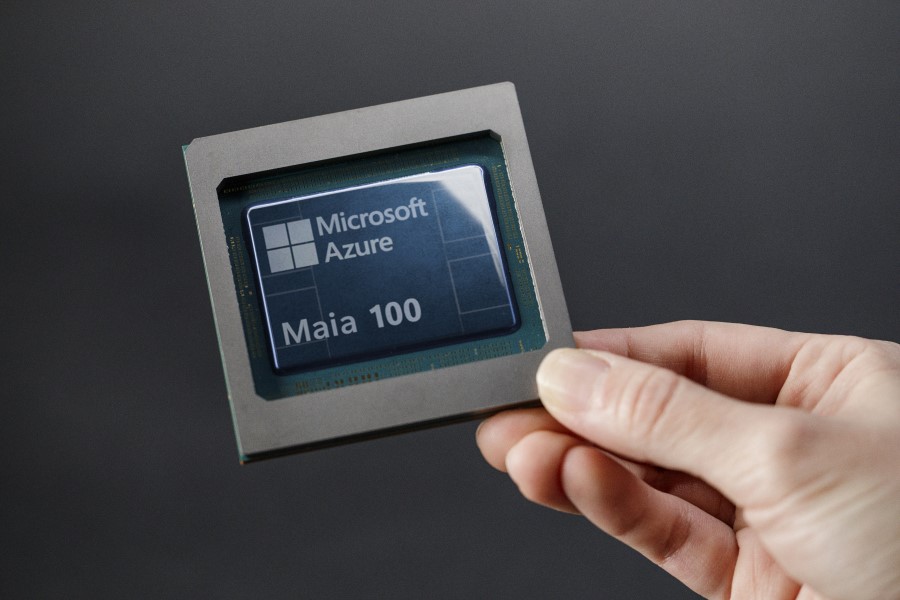
As artificial intelligence becomes central to cloud computing, major tech companies are investing in custom silicon to enhance performance, control costs, and optimize for AI-specific workloads. In line with this shift, Microsoft has introduced its own in-house AI chip — Maia (previously codenamed Majora). Designed for generative AI tasks and large language model training, the Maia chip marks a significant milestone in Microsoft’s cloud infrastructure strategy.
This blog delves into what the Microsoft Maia chips are, their features, use cases, and what they mean for the future of AI and Azure.
What Are Microsoft Maia Chips?
Microsoft Maia is a custom-built AI accelerator chip designed specifically for data center workloads such as AI inference, training of large language models (LLMs), and generative AI applications. It was introduced in November 2023 as part of Microsoft’s broader strategy to optimize its Azure cloud infrastructure.
The Maia chips represent Microsoft’s efforts to reduce dependency on third-party hardware like Nvidia’s GPUs and provide vertical integration in its AI offerings — from hardware to model deployment.
Why Microsoft Built Its Own AI Chip?
Several factors led Microsoft to develop the Maia (Majora) chip:
-
Rising AI Workloads: The explosive growth of generative AI and tools like ChatGPT demand immense computing power.
-
Scalability: Azure must scale quickly to support enterprise AI services like Microsoft Copilot and Azure OpenAI.
-
Cost Optimization: Custom chips offer better control over energy efficiency, performance tuning, and cost per workload.
-
Cloud Competition: With AWS (Inferentia, Trainium) and Google (TPUs) already offering custom silicon, Microsoft is aligning to remain competitive.
Key Features of Microsoft Maia (Majora) Chip
-
Optimized for AI Inference and Training
Maia chips are tuned for large-scale matrix operations required in transformer models and deep learning networks. -
Built on 5nm Process Technology
Manufactured by TSMC, the Maia chip uses an advanced 5-nanometer process, allowing higher transistor density and performance efficiency. -
High Bandwidth Memory (HBM)
It supports HBM, enabling faster data transfer between memory and compute cores — crucial for AI workloads. -
Custom Cooling and Packaging
The Maia chip is paired with a custom server board and cooling system, optimized for Microsoft’s cloud-scale architecture. -
Integration with Azure Data Centers
It runs within Microsoft Azure’s custom server racks, ensuring full-stack control from silicon to software.
Use Cases and Deployment
The Maia chips are currently being used to power Microsoft Copilot, Bing AI, Azure OpenAI Service, and other AI-powered enterprise tools. They’re also intended to support inference and training of OpenAI’s large language models, including GPT-4 and future models.
These chips play a key role in Microsoft’s efforts to create sustainable, energy-efficient AI data centers.
Maia vs Nvidia GPUs: A Strategic Move
While Nvidia’s H100 GPUs remain a core component of Azure’s infrastructure, Maia chips allow Microsoft to:
-
Reduce long-term reliance on external vendors
-
Lower operational costs
-
Optimize infrastructure for specific use cases
-
Tailor performance to its own AI services (like Microsoft 365 Copilot)
Rather than replacing Nvidia, Microsoft’s Maia chips complement its existing GPU-based architecture, enabling a more hybrid and flexible approach.
Future Outlook
Microsoft’s investment in custom silicon is more than a hardware strategy it’s about controlling the AI stack end-to-end. As generative AI expands across sectors, the demand for efficient, scalable, and secure compute will intensify. Maia (Majora) positions Microsoft to:
-
Deliver consistent AI performance at scale
-
Reduce energy consumption in data centers
-
Compete directly with other hyperscalers on hardware innovation
-
Support open and proprietary AI models in a cost-effective manner
A Strategic Leap for Microsoft
The introduction of Microsoft Maia chips represents a significant shift in cloud infrastructure. With AI rapidly reshaping business operations, custom silicon like Maia enables Microsoft to deliver smarter, faster, and more efficient AI solutions to its customers.
As organizations adopt AI tools at scale, leveraging cloud platforms with AI-optimized hardware will be critical and Microsoft Maia is set to play a foundational role in that transformation.